Research & insights / Research guide
Beyond Human Design
Who wrote the Quran? Five forensic tests of authorship
Muslims believe the Quran is the speech of God revealed to Muhammad. The Quran’s Hidden Architecture examines that claim by testing five properties of the Arabic text rather than treating belief as a substitute for evidence.
Editorial reading guide to the work of Abdul Zahir Sheikh
How the research approaches the question
The five lines of inquiry are stylometry, the distribution of words occurring only once, shifts in grammatical person (iltifat), verse length and concentric chapter structure. The book also considers the traditional account of revelation over twenty-three years, and asks how that history affects the plausibility of intentional human composition.
What the evidence can and cannot establish
Sheikh argues that the combined results favour non-human authorship. The probabilities depend on how chance and intentional composition are modelled, how textual features are selected and whether the tests are independent. A probability under a null model is not a posterior probability of divine authorship.
What is ring composition?
A literary pattern in which corresponding passages surround a central section. It is found in other literature too; the investigation asks what the Quran’s particular patterns imply under its historical conditions.
Further reading and sources
The related book sets out the full argument, sources and methodology. This guide is an introduction, not an independent replication or review of the findings.
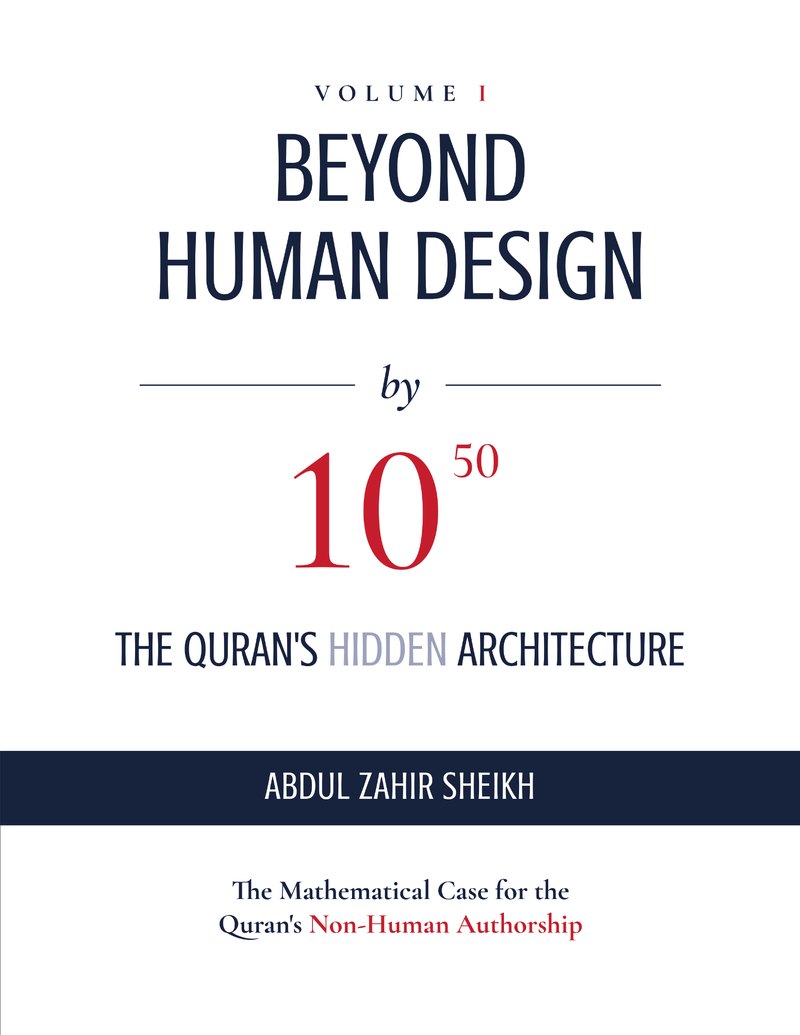
The Quran’s Hidden Architecture
Explore the complete investigation, available formats and purchase options.
Explore the bookContinue exploring
- Quranic authorship: linguistic, literary and historical evidence
- How can religious scriptures be authenticated? Seven forensic tests
Specialist explainers
Related research
Related research
What is iltifat in the Quran? Grammatical shifts and their meaning