Research & insights / Specialist article
Beyond Human Design · Research methods
The number 19 in the Quran: how to test numerical patterns
A test of verse length is different from a claim that every feature of the Quran follows a numerical code. Volume I examines a narrow hypothesis about the frequency of nineteen-letter verses.
Editorial research guide to the work of Abdul Zahir Sheikh
Define the observation before testing it
Quran 74:30 mentions nineteen. The investigation uses that reference to motivate a specific question about the Arabic text. A meaningful test must define the spelling convention, the verse boundaries and what counts as a letter before inspecting the outcome. Counting written characters is not the same as counting sounds or words. A result under one convention should not silently be treated as a result under every convention.
From a count to a statistical test
A published 2025 study by Zia and Tarana Hashim examines the frequency of verses containing nineteen letters. A count becomes evidence of an unusual pattern only when it is compared with an explicit expectation. For instance, an expected frequency may be estimated from neighbouring verse lengths or from a fitted distribution. The choice of model matters: a smooth distribution is an assumption rather than a law of Arabic composition.
What a reader should ask
Does the analysis retain the entire chosen text? Is the comparison distribution fitted without the target observation? Are other possible target lengths accounted for? Can another researcher reproduce the result from the same text? Testing alternative counting conventions and reporting their outcomes is more informative than presenting only the strongest result.
What the finding means for authorship
The book treats the numerical observation as one strand of a broader forensic argument, not as a replacement for linguistic or historical evidence. A low probability under a particular chance model does not by itself give the probability that a human authored the Quran. Deliberate design and other non-random processes must also be considered. The full book explains how the author weighs these alternatives.
Sources and further reading
This editorial guide introduces the book’s approach; it is not an independent replication or a substitute for the complete research.
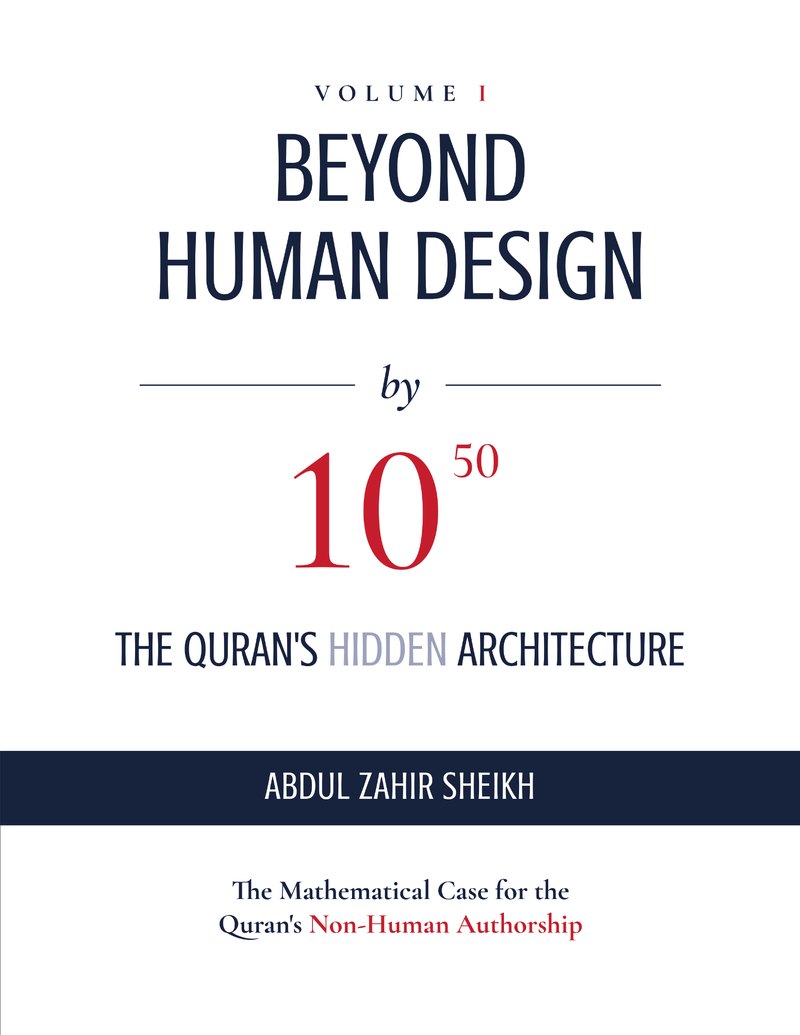
The Quran’s Hidden Architecture
Explore the complete investigation, available formats and purchase options.
Explore the book