Research & insights / Specialist article
Beyond Human Design · Research methods
How graph theory helps examine Hadith transmission chains
An isnad records the people through whom a Hadith was transmitted. Graph theory can represent those relationships and examine the structure of the transmission network without replacing traditional Hadith criticism.
Editorial research guide to the work of Abdul Zahir Sheikh
From individual chains to a network
Imagine a teacher whose report reaches two students, each of whom teaches a later narrator. Each person becomes a node and each transmission relationship an edge. Combining many reports creates a graph that can reveal shared transmitters, branching paths and possible chronological inconsistencies. This representation does not imply that every recorded relationship is historically verified.
What network measurements reveal
Degree counts connections to a narrator. Centrality describes a narrator’s structural position. Path analysis examines how reports travel through successive generations. A 2022 study by Shuaib and colleagues demonstrates how historical Hadith networks can be studied computationally. Its dataset is separate from the one examined in The Network of Truth; findings should not be combined without matching their definitions.
Where a mathematical test can fail
Two names may refer to one person, or the same name may refer to different people. Missing records can distort connectivity. Several chains can also depend on the same earlier source, so their number is not automatically a measure of independent corroboration. Researchers need identity resolution, date checks and sensitivity analysis before interpreting network measurements.
How the book approaches authenticity
The Network of Truth examines whether the observed structure resembles an organically developed record of transmission or a systematically fabricated one. Its conclusion concerns the network as a whole. Individual reports still require examination of the chain, narrator reliability and textual content. The distinction is essential: an authentic-looking network cannot authenticate each statement within it.
Sources and further reading
This editorial guide introduces the book’s approach; it is not an independent replication or a substitute for the complete research.
- Shuaib et al. (2022), Trophic analysis of a historical network reveals temporal information
- Social Network Analysis of Hadith Narrators from Sahih Bukhari
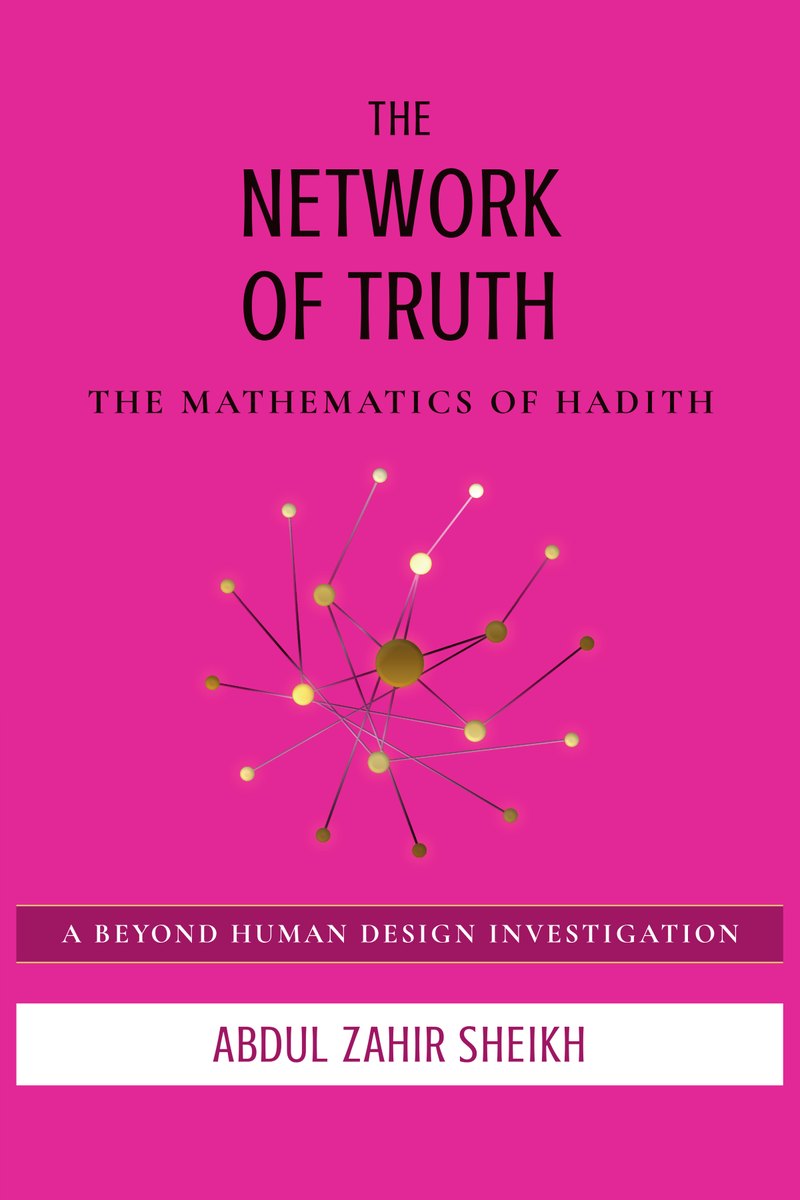
The Network of Truth
Explore the complete investigation, available formats and purchase options.
Explore the book