Research & insights / Research guide
Leaders & Boards
How to prepare a credible whistleblower report
The Whistleblower’s File examines what makes a report usable by an investigator, regulator or court. It distinguishes a specific, documented concern from an allegation that cannot readily be tested.
Editorial reading guide to the work of Abdul Zahir Sheikh
How the research approaches the question
The book proposes six tests, examines five jurisdictions and discusses documents, provenance, contemporaneous notes, corroboration and financial records. A practical report separates observations from inferences and identifies where evidence can lawfully be found.
What the evidence can and cannot establish
Protection and reporting obligations differ by jurisdiction and employer. Do not access records unlawfully or disclose confidential information without appropriate advice. A strong file does not guarantee protection or a favourable outcome.
What makes a report easier to investigate?
Specific dates, relevant transactions, identifiable records, a clear account of what is known and a distinction between direct evidence and suspicion.
Further reading and sources
The related book sets out the full argument, sources and methodology. This guide is an introduction, not an independent replication or review of the findings.
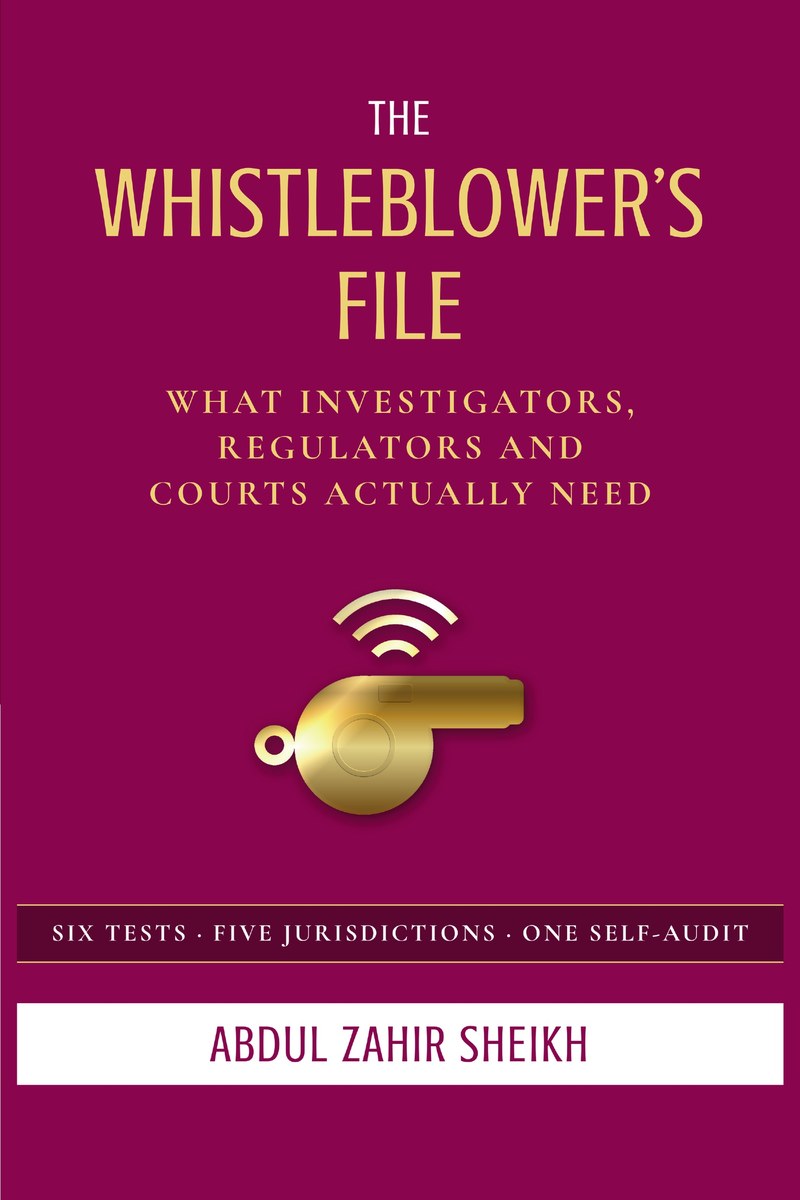
The Whistleblower’s File
Explore the complete investigation, available formats and purchase options.
Explore the book